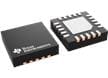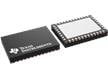


TPS25854QRPQRQ1

Texas Instruments
595-TPS25854QRPQRQ1
TPS25854QRPQRQ1

Fabricante:

Descripción:
Interfaz IC USB Single 3-A USB Type- C charging ports co

Modelo ECAD:
Descargue Library Loader gratis para convertir este archivo para su herramienta ECAD. Conozca más sobre el modelo ECAD.

Disponibilidad

Existencias:
No en existencias
Plazo de entrega de fábrica:
12 Semanas Tiempo estimado de producción de fábrica.
Mínimo: 3000   Múltiples: 3000
Precio unitario:
S/ -.--
Precio ext.:
S/ -.--
Est. Tarifa:

Precio (PEN)

Cantidad Precio unitario
Precio ext.
Envase tipo carrete completo (pedir en múltiplos de 3000)
S/ 11.57 S/ 34,710.00

Atributo del producto Valor de atributo Seleccionar atributo
Texas Instruments
Categoría de producto: Interfaz IC USB
RoHS:  
TPS25854
SMD/SMT
VQFN-25
5.5 V
26 V
- 40 C
+ 125 C
Reel
Marca: Texas Instruments
País de ensamblaje: Not Available
País de difusión: Not Available
País de origen: Not Available
Sensibles a la humedad: Yes
Número de puertos: 1 Port
Voltaje de alimentación operativo: 5.5 V to 26 V
Tipo de producto: USB Interface IC
Cantidad de empaque de fábrica: 3000
Subcategoría: Interface ICs
Productos encontrados:
Para mostrar productos similares, seleccione al menos una casilla de verificación
Seleccione al menos una de las casillas de verificación anteriores para mostrar productos similares en esta categoría.
Atributos seleccionados: 0

Esta funcionalidad requiere que JavaScript esté habilitado.

USHTS:
8542390070
ECCN:
EAR99

TPS258x-Q1 Integrated USB Charging Port Solution

Texas Instruments TPS258x-Q1 Integrated USB Charging Port Solution integrates a monolithic, synchronous, rectified, step-down, switch-mode converter with internal power MOSFETs. It also includes two USB current-limit switches with charging port auto-detection. The TPS2585x-Q1 offers a compact solution that achieves 6.6A of continuous output current with excellent load and line regulation over a wide input supply range. The synchronous buck regulator operates with peak-current mode control and is internally compensated to simplify the design. A resistor on the FREQ pin sets the switching frequency between 200kHz and 3MHz. Operating below 400kHz results in better system efficiency, and operation above 2.1MHz avoids the AM radio bands and allows for a smaller inductor.